
Marketing Automation · CRM · Lead Nurture · AI Marketing
Marketing Automation Beyond WhatsApp: A 2026 Playbook for Indian Businesses
 Aditya Kalpande··8 min read

Marketing automation is bigger than the WhatsApp chatbot you already built
Most Indian founders who hear marketing automation think of a WhatsApp bot answering the first few questions from a new enquiry. That is one piece of a much larger system, not the whole thing. The fuller picture includes what happens before a lead ever messages you, how a contact moves through your CRM once it is captured, which emails or SMS messages fire automatically based on what that person actually does, and how a cold lead from three months ago gets revived without a salesperson manually reviewing a spreadsheet every Friday.
We think about automation as three connected layers, capture, nurture and pipeline. Capture is how a lead enters your system cleanly from a form, an ad or a call. Nurture is the sequence of touches that moves someone from curious to ready without a human writing each message by hand. Pipeline is how your CRM automatically scores, tags and routes that lead so your sales team spends time on the ten percent of contacts actually worth calling today. Most businesses we audit have invested in capture, built almost nothing in nurture, and have a CRM that is really just an expensive spreadsheet with a login screen.
Lead scoring that an actual human would trust
A workable lead scoring model does not need machine learning on day one, it needs honesty about what a buying signal actually looks like in your business. Assign points for specific, observable actions, opening three or more emails in a sequence, visiting a pricing page twice, replying to a WhatsApp message with a budget figure, or booking a call and then rescheduling rather than cancelling. Subtract points for signals that predict a dead lead, an email that bounces, a phone number that goes straight to voicemail twice, or silence for more than fourteen days after an otherwise warm conversation.
The point of scoring is not precision, it is triage. Once a lead crosses a threshold you define, route it to a human within minutes, not at the next morning stand up. Everything below that threshold stays in an automated nurture sequence until it either crosses the line or ages out. For a services business running fifty leads a week, this single change routinely cuts the time a salesperson spends on unqualified conversations by a third or more, simply because the system stops treating every lead as equally urgent.
Nurture sequences that do not read like a template
A good nurture sequence runs five to seven touches over two to three weeks, mixing channels instead of hammering the same one. A typical sequence for a considered purchase might open with an email answering the one question every buyer in that category actually asks, follow with a WhatsApp message four days later sharing a relevant case study or a short video, then a second email a week in addressing the most common objection directly, pricing, timeline or proof, and close with a final message offering a specific next step such as a fifteen minute call rather than a vague invitation to connect.
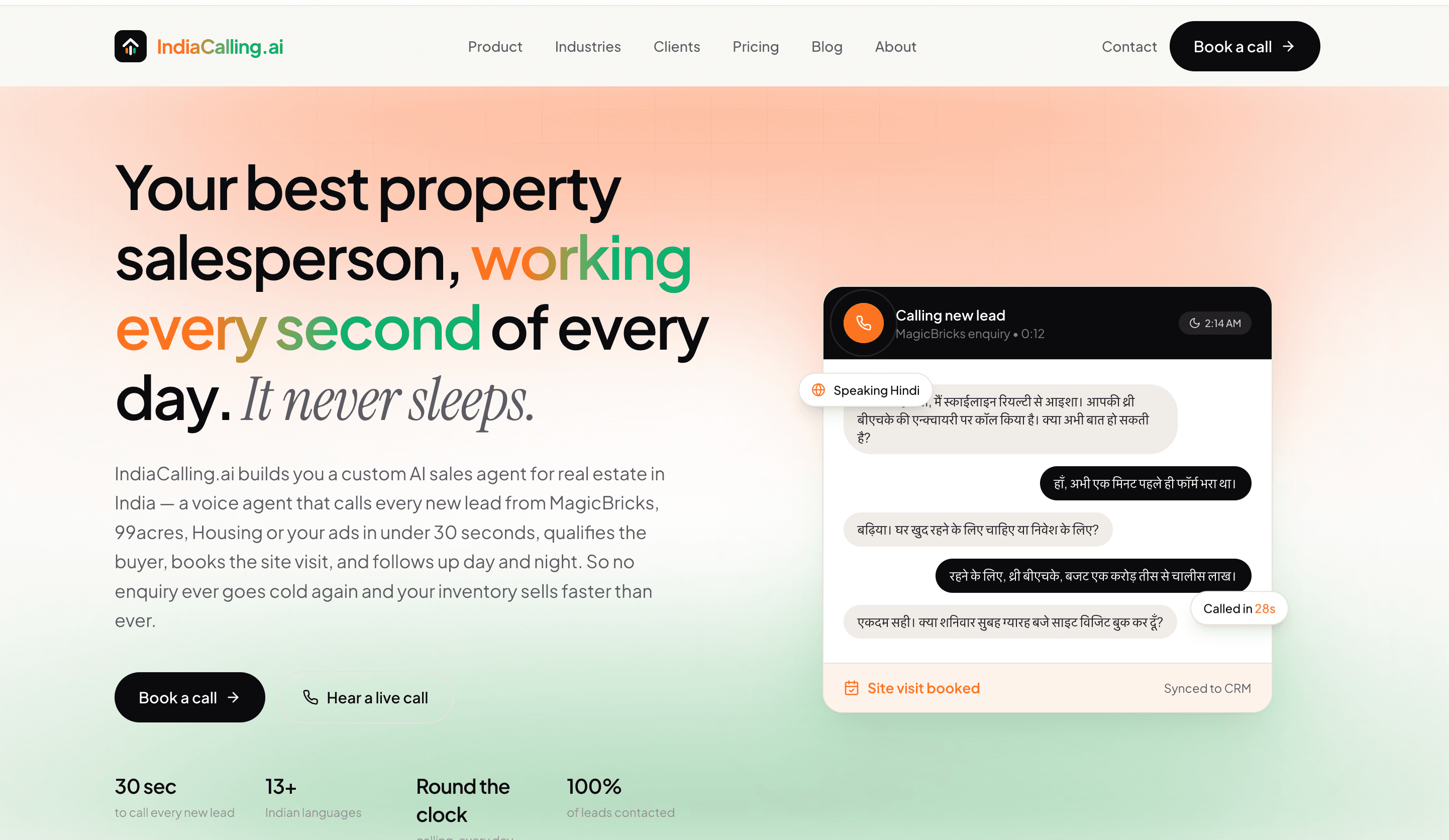
The sequences that convert share one trait, every message earns its place by giving the reader something useful, a number, an answer or a resource, rather than simply checking in to ask if they are still interested. We rebuilt exactly this kind of sequence inside the IndiaCalling.ai platform, where an AI sales agent handles the qualifying conversation in Hindi first and routes only genuinely warm leads to a human closer, and the lift in qualified conversations came almost entirely from faster, more relevant follow up rather than any change to the offer itself.
Your CRM should move leads, not just store them
A CRM that only stores contact details is a filing cabinet with better search. A CRM doing real work automatically moves a contact between stages based on behaviour, tags a lead as cold after a defined silence window, assigns ownership the moment a lead crosses your scoring threshold, and triggers the next message in a sequence without anyone remembering to send it manually. If your team is still manually updating deal stages after every call, the automation layer is missing, not the CRM itself.
Set up three automations before anything more advanced, instant assignment of a new lead to a salesperson based on territory or product line, an automatic reminder to the assigned owner if a lead sits untouched for more than four hours, and a reactivation sequence that fires automatically for any contact that goes cold for thirty days. These three alone recover revenue that most businesses are quietly leaving on the table every single month.
Where AI agents fit into the automation stack, and where they do not
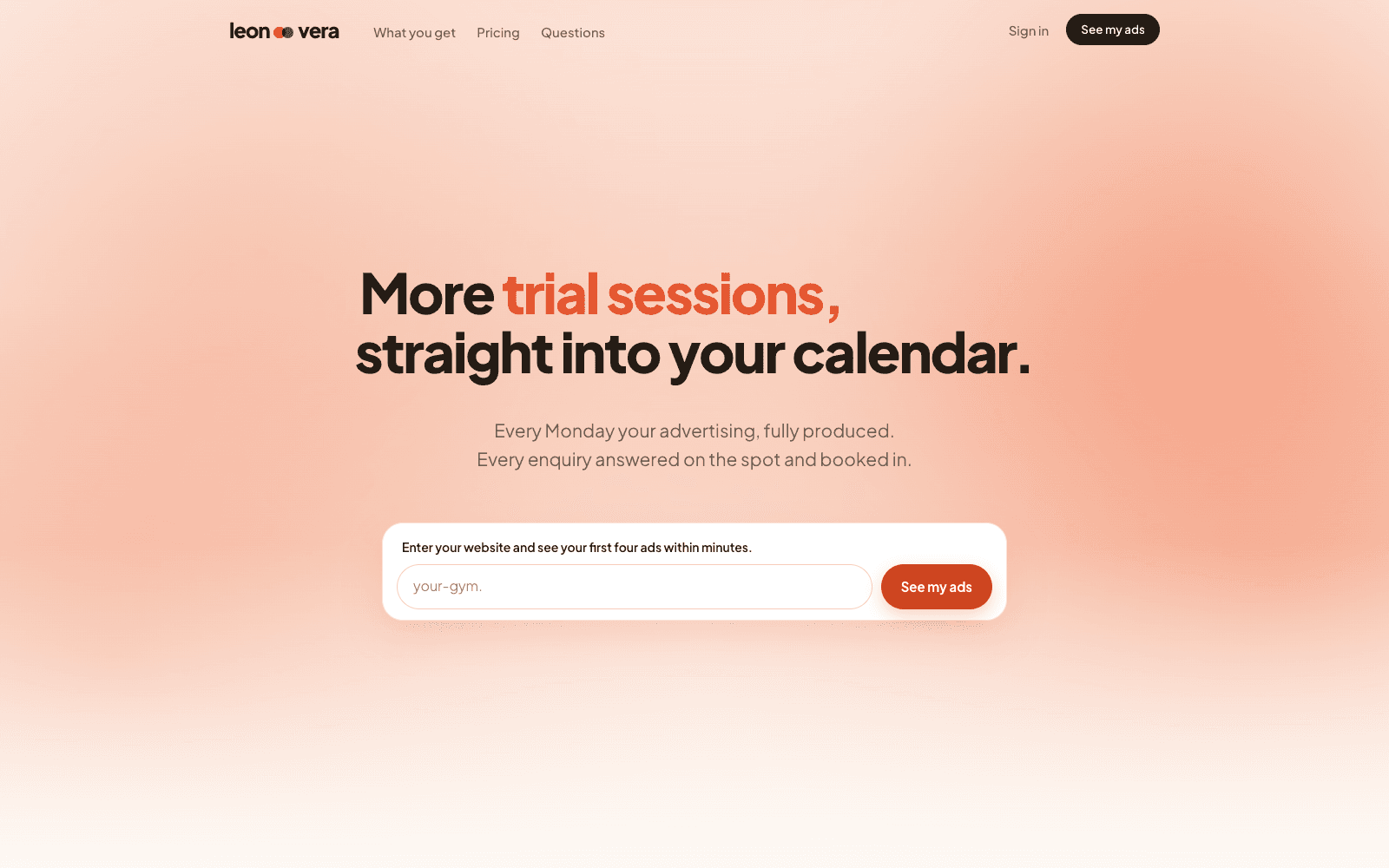
AI agents are best used at the two ends of the funnel, the first response that qualifies a brand new lead in seconds, and the reactivation message that revives a contact a human would never get around to following up manually. The middle of the funnel, a genuinely warm lead actively comparing options, still converts best with a real person who can read tone, negotiate and build trust, which is exactly the handoff we built into Leon & Vera, where an AI marketing and booking agent qualifies and books straightforward requests automatically while anything nuanced routes to the studio team directly.
The mistake we see most often is businesses trying to automate the entire funnel end to end on day one. Start with the highest volume, lowest judgment part of the funnel, usually first response and basic qualification, prove it works, and only then extend automation further down the pipeline where the cost of a wrong automated decision gets higher.
The metrics that tell you automation is actually working
Track time to first response, the percentage of leads that get a reply within five minutes versus within a day, since this single number predicts conversion more reliably than almost any creative or targeting change. Track sequence completion rate, how many contacts make it through your full nurture sequence without dropping off, and lead to opportunity conversion rate before and after you turn automation on for a given segment. If none of these numbers move within six to eight weeks of launching a new automation, the sequence or scoring model needs rework, not more patience.
Avoid the trap of measuring automation by volume sent. A nurture sequence that reaches ten thousand contacts with poor completion and reply rates is doing less for your business than a tighter sequence reaching one thousand contacts that actually finish it and respond.
Where B2Brands fits in
We build the full capture, nurture and pipeline stack for clients rather than bolting on a single chatbot and calling the job done, the AI lead qualification pipeline inside our own AIBOOTSTRAPPER engine runs on the same scoring and routing logic described here, proven on our own acquisition funnel before we bring it to a client's CRM. If your leads are landing in a system that stores them but does not move them, our free AI marketing audit will show you exactly which of the three layers, capture, nurture or pipeline, is actually costing you revenue right now.
See this approach applied in our own work

Aditya Kalpande
Founder and CEO, B2Brands
Aditya has spent over eight years building brand identities, websites and performance marketing systems for founders across India, and now leads B2Brands' AI first approach to growth marketing.
Ready to put this into practice?